
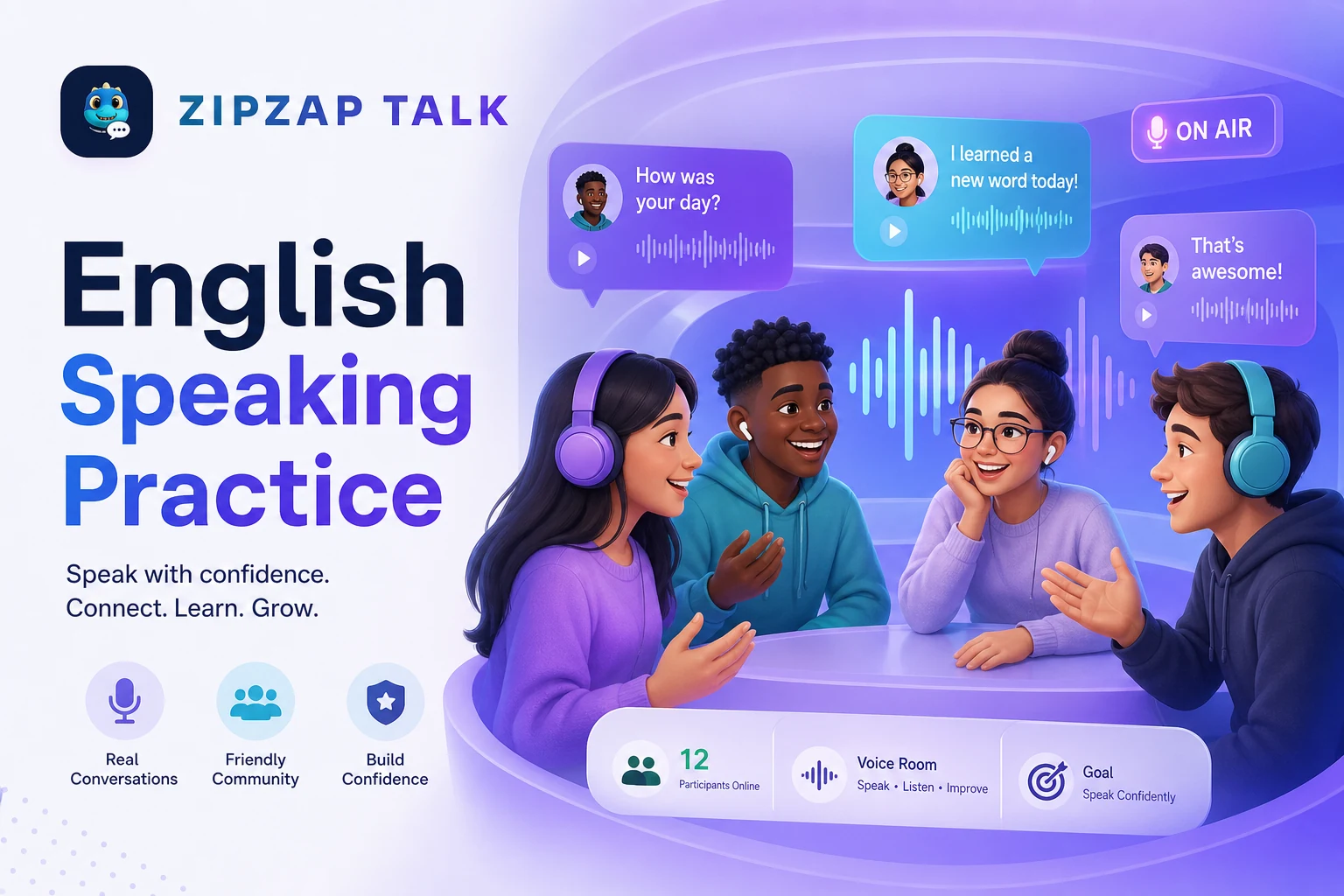
Speaking anxiety is normal. Your brain treats foreign conversation like a performance test. It is not — it is cooperative noise-making with strangers who have forgotten worse mistakes than yours.
Shrink the first step absurdly small
One word. One greeting. One "I do not understand, please repeat." Success is showing up, not sounding polished.
Practice in groups before one-on-one
Voice rooms spread attention across several people. Nobody hears every stumble. Group settings are underrated training wheels for anxious speakers.
Use translation to reduce fear
Knowing you can fall back on live translation lowers cortisol enough that many learners finally speak. Confidence grows from reps, not from waiting until fear disappears.
Reframe mistakes as data
Every correction is free feedback. Native speakers rarely remember your errors five minutes later. You are the only one replaying them at 2 am.
When anxiety might need more support
If panic is severe, a tutor or therapist familiar with performance anxiety can help alongside app practice. Language learning should feel challenging, not harmful.
ZipZap Talk lowers the social stakes with vibe matching and translation in voice rooms — so your first words happen in a friendlier room than a formal exam. Join the waitlist and practice in a space built for learners, not judges.