
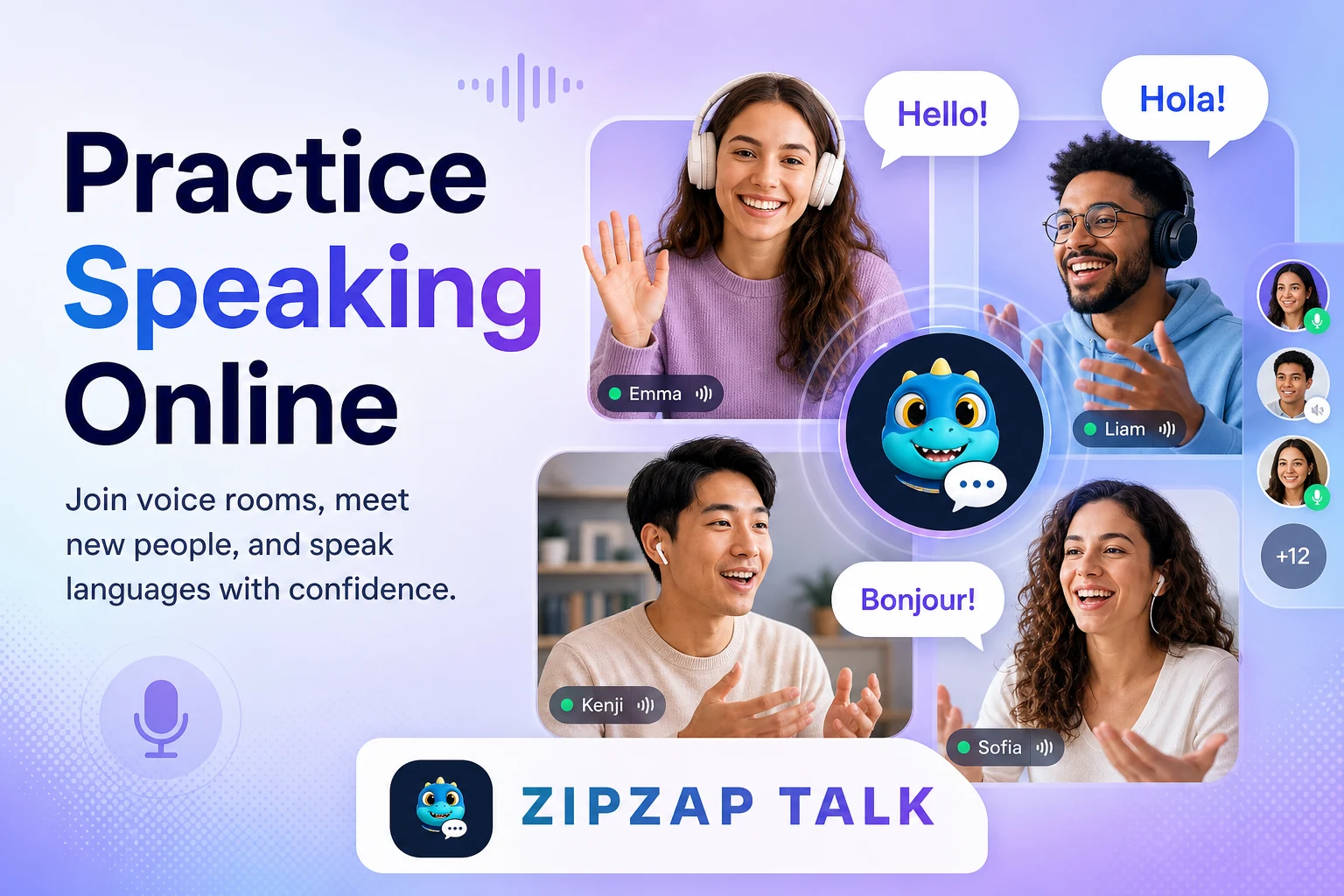
Voice rooms are live audio spaces — like a group call where you can drop in, listen, or talk. For language learners they are gold because the stakes are lower than a formal lesson but higher than silent study.
How a typical language voice room works
You enter a room themed around a language or topic. Some people host, others lurk until they are ready. You raise a hand or just unmute when there is a gap. Rooms with live translation let mixed-language groups stay together instead of splitting by country.
Why beginners should try rooms before tutors
Tutors are great but expensive for daily practice. Rooms give you variety — different accents, speeds, personalities — for free or cheap. You also learn to follow group conversation, which one-on-one tutoring rarely teaches.
Etiquette that keeps you invited back
- Listen more than you talk at first
- Do not correct people aggressively unless they ask
- Keep background noise low
- If you dominate airtime, pause and ask someone else a question
Getting over mic anxiety
Say one sentence. That is the whole goal for session one. "Hi, I am learning [language] and I am nervous" is a perfectly fine opener. Regulars have heard it a thousand times and will usually help.
Platforms like ZipZap Talk combine voice rooms with AI translation so you are never the only person who does not understand. If rooms intimidated you before, that layer of support makes a real difference.